
Looking Forward
PWRC’s leadership approach is rooted in service, accountability, and long-term community impact. The organization continues to build partnerships, programs, and systems designed to support youth before they encounter barriers that shape the rest of their lives.
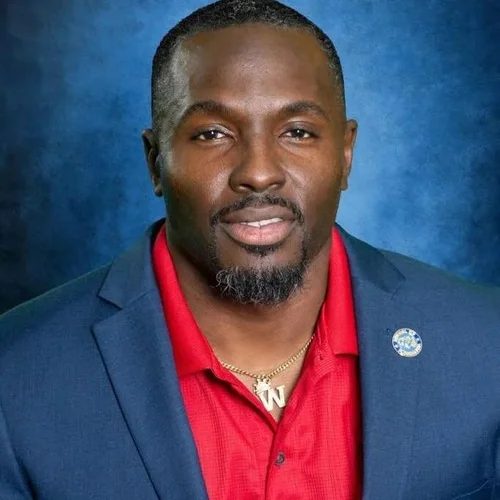
Willie CooK II
Founder & Executive Director
Willie Cook II is a Jacksonville-based community leader and youth advocate with over a decade of experience working at the intersection of violence prevention, youth development, and family support. His background includes leadership and program management roles with organizations such as Cure Violence Jax, Families of Slain Children (FOSCI), and the Center of Hope.
PWRC was established to formalize years of frontline community work focused on education, mentorship, and prevention, with the goal of reducing youth incarceration and strengthening pathways to long-term stability and opportunity
Why I Created The Safe Encounters Initiative™
I was born in the height of America’s crack epidemic. Before I was old enough to form memories, my brother and I entered the foster care system due to neglect. Both of our parents were battling the streets — my father dealing and using, my mother using, and when my father went to prison our entire household fell apart. We were eventually adopted and raised by my grandmother, a nurse, who gave us love and stability, but my father remained in and out of prison for most of my childhood.
Growing up without a consistent father figure left a silence in my life that the streets were all too ready to fill. By the 9th grade, I had already started selling drugs, surrounded by young men who came from the same fatherless homes and the same unhealed trauma. We didn’t know it, but we were being shaped by forces bigger than us: poverty, lack of guidance, and a justice system we didn’t understand.
In my late teens and early twenties, I started having repeated run-ins with the law. Between the ages of 16 and 25, I was arrested over ten times, some because of the choices I made, and some simply because I didn’t know how to communicate, de-escalate, or legally protect myself in encounters with law enforcement. I’ve had officer interactions that were respectful and professional, and I’ve had encounters that escalated quickly and unnecessarily. Looking back now, I realize that had I known the information I teach in this course — about communication, de-escalation, basic law, and how to move in certain situations — I could have avoided many of those arrests altogether.
Nobody taught us these things. Not in school. Not in church. Not in after-school programs. We grew up learning by experience — and experience in the legal system is expensive, traumatic, and often life-altering.
By my mid-twenties, I had accumulated a criminal record that made getting a decent job incredibly difficult, especially during a national recession. Career doors closed before I even had a chance to knock. The streets began to look like the only reliable option — fast, familiar, and unforgiving. Then I found out I was going to be a father, and suddenly the stakes were higher. I refused to let my son grow up without a father the way I did, so I chose the slow, painful route: working odd jobs, grinding through rejection, rebuilding myself piece by piece. It took nearly two decades to climb out of the hole that a few uninformed encounters and uninformed decisions had created.
But my story is not unique — and that’s the problem.
In communities across America, especially Black and Brown communities, thousands of young people face encounters with law enforcement without training, without guidance, and without context. They don’t understand how quickly things can escalate, how easily a moment can turn into a charge, how a charge can become a record, and how a record can follow you into job applications, housing screenings, and college admissions for the rest of your life. Some lose opportunities. Some lose their futures. And some lose their lives.
The Safe Encounters Initiative™ was created as a proactive solution.
Not to demonize police. Not to glorify the streets. But to equip young people with the tools I never had — tools that protect their lives, their futures, and their emotional well-being.
SEI teaches:
How to engage with law enforcement safely and legally
How to communicate and de-escalate
What rights you have — and how to exercise them responsibly
How criminal records impact employment, education, and housing
How to avoid preventable arrests and unnecessary escalation
How to stay alive, stay free, and stay in a position to win
This program exists because too many of our youth are losing too much from a lack of knowledge — physically, mentally, spiritually, and professionally. SEI is a preventive strategy designed to reduce incarceration, reduce criminal histories, reduce traumatic encounters, and reduce death. It is a curriculum for the communities where the likelihood of encounters is highest, and where the consequences are greatest.
I wrote this curriculum because I believe our youth deserve better outcomes than the ones I had to fight through. I wrote it because knowledge is protection. I wrote it because survival skills should not be passed down through jail stories and funerals. I wrote it because I want every young person — regardless of race, background, or zip code — to have a fair shot at life.
Welcome to The Safe Encounters Initiative™.
Because knowing how to survive an encounter shouldn’t be learned the hard way.
— Willie Cook II, Founder